10 new tours to book for 2026
Looking to book your holidays for this year? Take a look at our brand new tours departing for the first time in 2026.

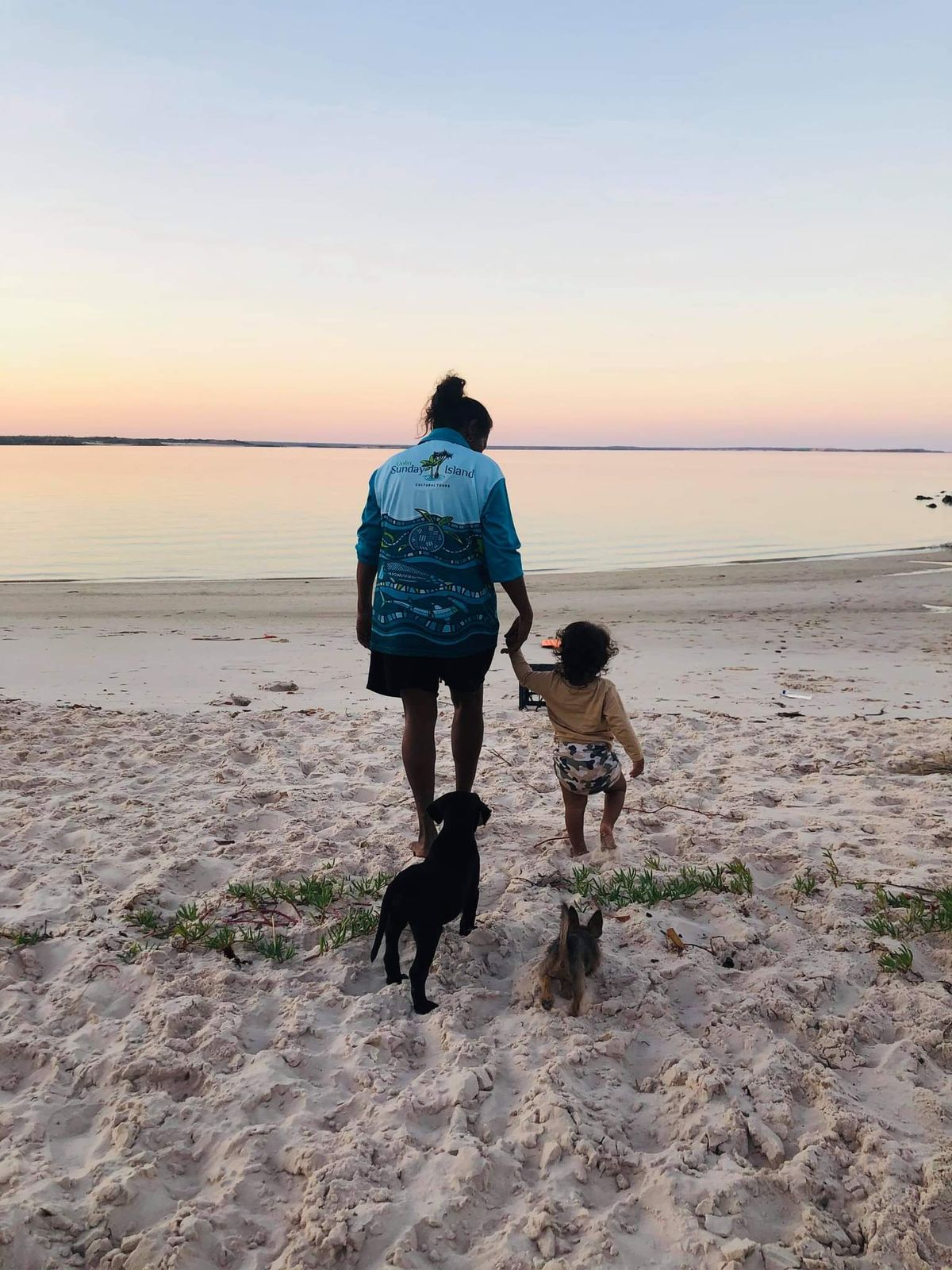
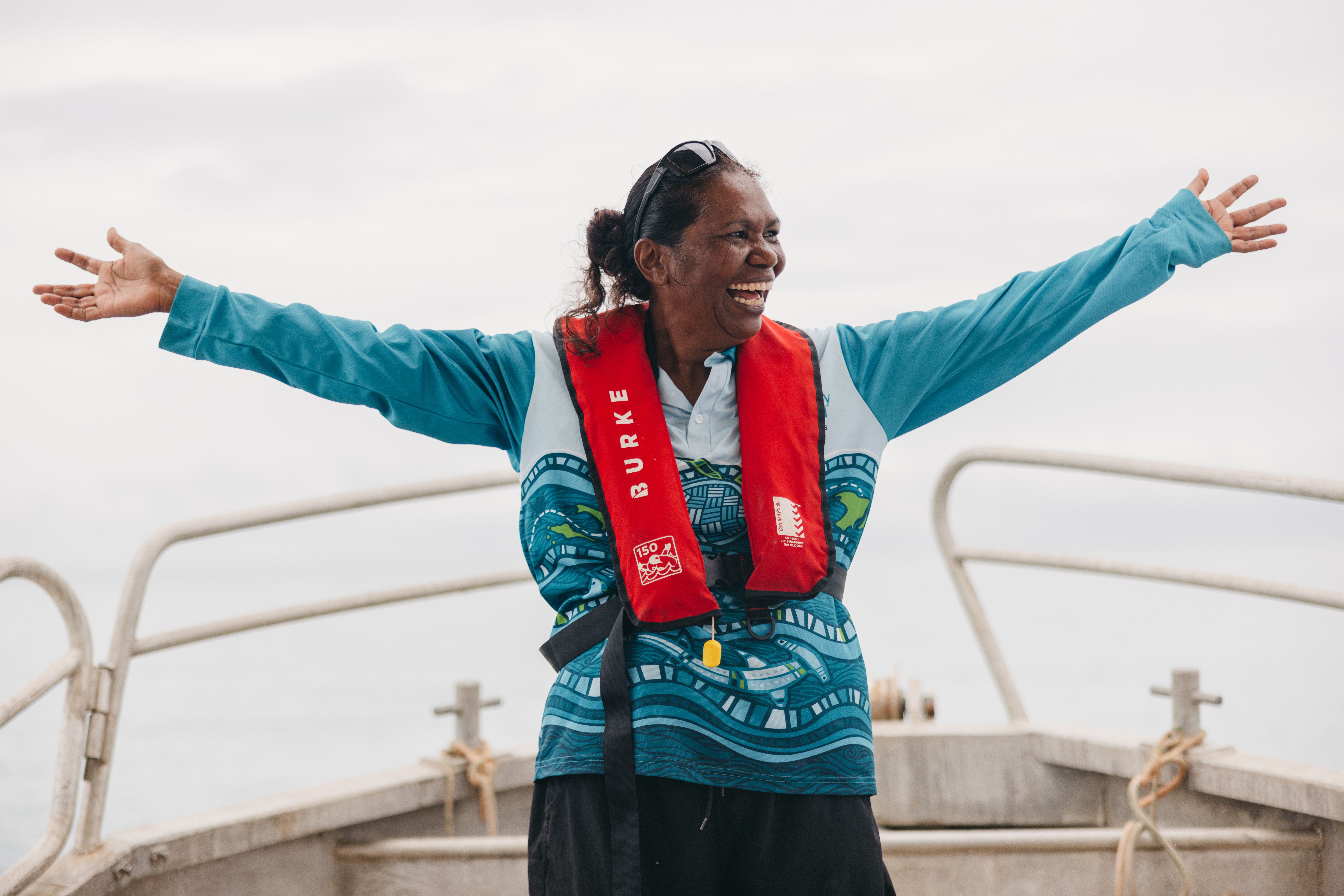
Feature photo: Rosanna Angus "bringing family together" with tours for women.
From crocodile tracks to a secret Makassan Tamarind tree, discover Bardi/Jawi lore on a unique women-only journey!
When I interviewed Rosanna Angus, we shared techniques we guides use to craft our stories. I especially wanted to know how she helps her guests understand and appreciate her Aboriginal lore and culture. I hope you’ll enjoy her storytelling, I did.
“I like to ask people to switch off their eyes,” she says, explaining that the way people use their eyes these days messes up their vision. “They look at their phones and computers and miss out on obvious things in the natural world.” Like crocodiles!
She tells the story of guiding a small group of guests in a search for bush food on the mangrove flats near her home on Bardi/Jawi land on the Dampier Peninsula, north-west of Broome in Western Australia.
The group had already passed a number of crocodile tracks in the mud when she wondered if anyone else had registered the huge slide marks these creatures leave behind.
“Did you see the crocodile tracks?” she asked. No one had. Everyone was safe, of course — Rosanna knows what she’s doing — but she realised how detached from the real world people had become.
“When we go looking for oysters, most people have no idea how to find them,” she says, “Although there is food everywhere, they are looking for it the wrong way; they don’t see it.”
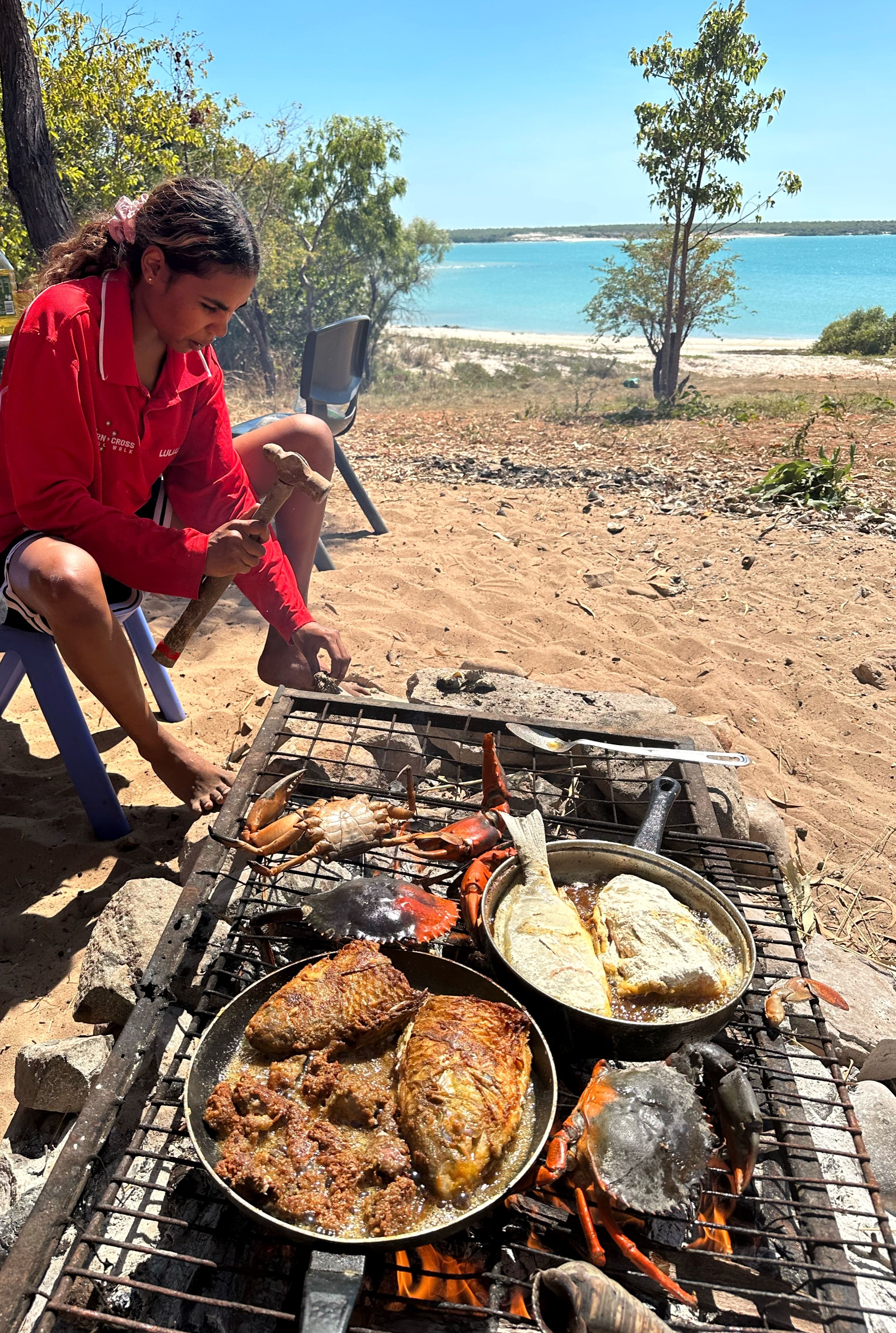
“I ask my guests to close their eyes, empty their minds, and feel what’s around them….when they open them again they start seeing oysters….and we have a good feed,” she says with one of her cheeky laughs.
This is part of the art of guiding, knowing the right time and place to breathe new concepts into your guests’ minds…and hearts. And it’s one of the reasons Rosanna was named Tourism Australia’s Tour Guide of the Year in 2023. This amazing woman knows how to explain things — how to tell her story — which is not surprising as storytelling is at the core of Aboriginal identity.
One of Rosanna’s dreams is to visit Makassa (a town on the Indonesian island of Sulawesi). I ask why and a fascinating story unfolds that relates to a tree she played in as a child. She begins by telling me her mother is from Bardi/Jawi country but her father was a Malay who came from Singapore to Broome as a pearl diver.
Around much of the Kimberley and the Top End unions between Indigenous Australians and people from south-east Asia were once common. What most people don’t realise is that interactions like this began long before Europeans arrived in Australia.
By way of explanation Rosanna's next words re-write my understanding of Australian history in the Kimberley: “My grandfather learnt Indonesian when he was little and he could speak it fluently which allowed him to communicate with the Makassans visiting Bardi/Jawi shores.” She says this as a matter-of-fact, as if everyone should know it! Why don't we?
This story has its roots in a significant trading relationship between Aboriginal people and the people of Makassa dating back at least 400 years and probably further.
Makassans in twin masted sailing vessels, called prahu (or prau), made extended annual visits to many locations in northern Australia to catch and dry trepang (sea cucumber) for sale in China as an aphrodisiac. At the minimum these round trips covered 3000 kilometres of open sea.
They came in small fleets, each boat carrying up to 30 crew, often sharing camping areas with Aboriginal people and trading cloth and tools for the valuable trepang.
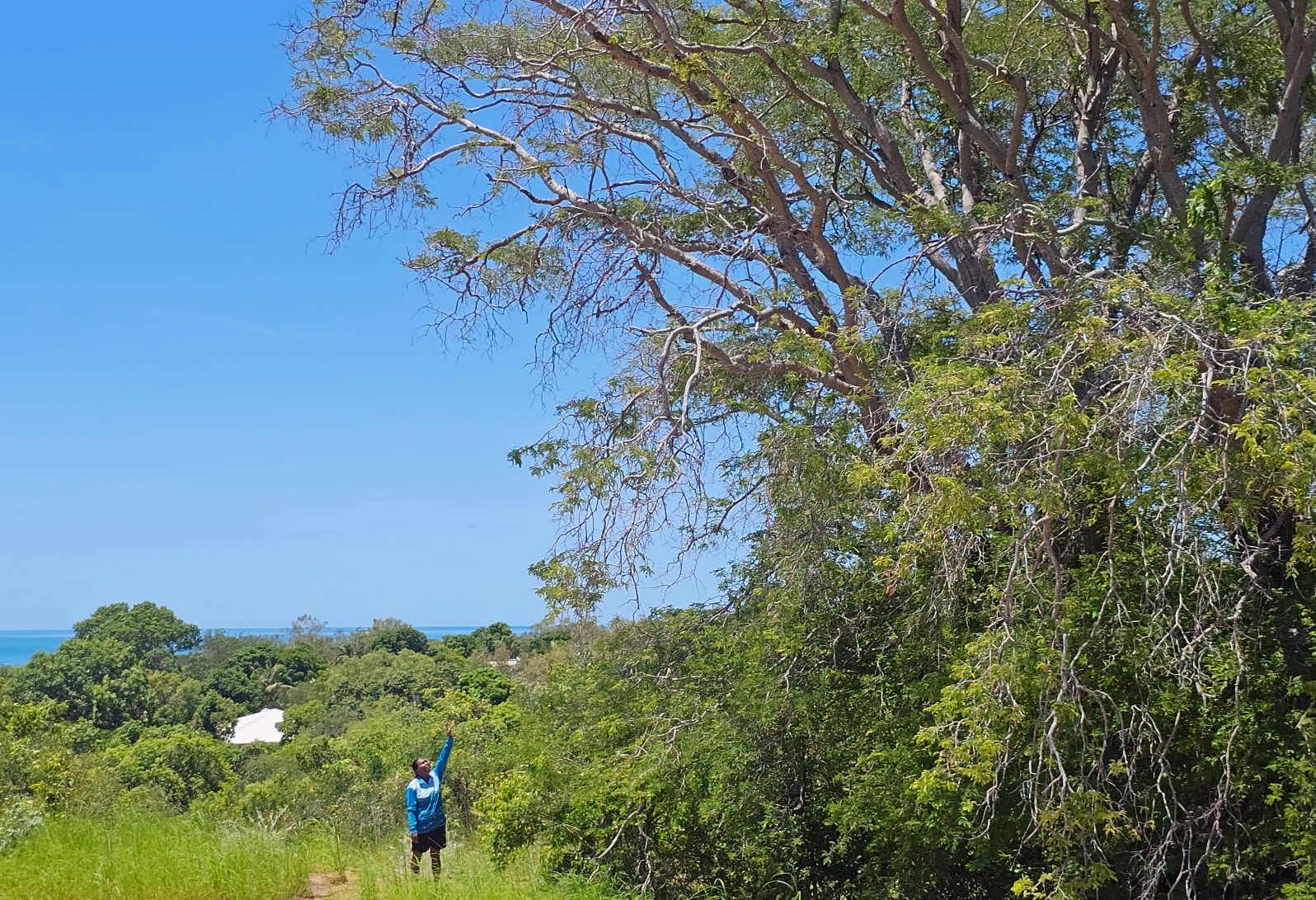
Rosanna’s oral history tells her that the tree she played in as a kid is a direct result of visits by Makassan traders. It’s an old Tamarind tree (Tamarindus indica) growing on a small hill near the Aboriginal community of Ardyaloon near the tip of the Dampier Peninsula at the entrance to King Sound. This area was known for its sea cucumber and the sheltered beaches nearby would have been a perfect place to camp while catching and processing trepang. But how did the Tamarind get there?
Tamarind is not native to Australia but it is a significant food tree for many people living in Asia and Africa. Tamarind trees are known to live for at least 400 years and can produce up to 375 kilograms of fruit a year.
Makassans used pulp in the seed pods of this tree to make paste-balls that have been used in Makassan cooking for centuries. These balls also contain seeds. They travel well, lasting for many months, and would certainly have been carried by the trepang hunters. After the pulp is used the seeds are thrown away and will germinate anywhere in a tropical climate.
“I love this story because it tells us about a complex and friendly trading relationship with our northern neighbours long before Europeans arrived here,” says Rosanna, “This is my story — it revolves around that Tamarind tree I used to climb when I was a child — and that’s why I want to visit Makassa.” She laughs when I say I'd love to join her.
Intrigued? Read more here: Tamarind trees as the ‘accidental heroes’ in Makassar – Indigenous Australia’s ancient contacts
I wonder about her surname, Angus, and ask if it’s her father’s. It’s not. She explains that it’s an English interpretation of her Aboriginal great grandfather’s traditional name, Ungij, which was forcibly changed by the European settlers to Michael Angus. That new surname was inherited by her grandfather then passed on, through Rosanna’s mother, to Rosanna.
“In the old days my people only needed one name but the new settlers decided to give us two names.” I never asked Rosanna why she didn't use her father's surname; after all, why should any culture adhere to a doctrine of patrilineal descent? Which segues perfectly into tours for woman..........
Australian Geographic Travel (AGT) offers an exclusive women-only tour led by Rosanna. Asked why she decided to do a women-only trip she provides a very feminine answer: “I feel like I am in my own space, where I can be a woman and do what I need to do to share the feminine side of my culture to other women.”
Aboriginal people generally separate women’s and men’s “business” and Rosanna feels more comfortable adhering to that cultural tradition. But there’s more to it.
She feels that women have a major role in “bringing family together” whether they are female, male or children. “I don’t do all the guiding, I bring in my sister and some of the men to help out on my women-only tour,” she says, “For instance I can’t go hunting, that’s for the men, but I can show people how to gather food.”
Bringing the family together keeps cropping up in her conversation. For Rosanna that’s reason enough to have women-only tours because it keeps the community strong and, as a bonus, helps non-Indigenous women discover their roots as women.
AGT’s philosophy revolves around conservation, protecting the planet from climate change (reducing our carbon footprint) and working with Indigenous People. I ask Rosanna about her feelings on these important issues.
“I’ve seen the way our coastline is changing and it worries me,” she says, “I’ve lived here all my life and there’s no doubt the sea is rising.” The numbers of fish are reducing and days are getting hotter in the Broome region too.
But on the upside, she goes into detail about how her people engage in “cultural burning” which goes back thousands of years and is designed to reduce the intensity of fires and keep “country” clean and able to sustain wildlife.
“We are sea people, so we care for dugong, turtle, shark and everything because they are our life,” she says with a finality rooted in millenniums of conservation by First Nations People.
Rosanna is the Chairperson of the Joint Management Board of the Bardi and Jawi Garrda Marine Park: “It's our obligation to continue to care for this country traditionally and now, with the support of the marine scientists and strategies under our marine park planning, we're continuing to look after our saltwater country.” she says.
“Aboriginal people have been caring for country for thousands of years — I show my guests how we do that.”
Finally, I ask Rosanna how she learnt to be a guide. She explains that from a young age she helped her Uncle Vincent on his mudcrab tours out of Kooljaman on the Dampier Peninsula. He was known locally as “Mudcrab Dundee” and was highly respected as a guide and raconteur.
“I used to watch how he did things, how he talked and explained stuff; I loved it and wanted to be like him,” she says, “He taught me how to be a good storyteller.”
She’s come a long way since then. She’s a mother, grandmother, business owner, nationally recognised Tour Guide and more recently was appointed to the Board of the Western Australia Tourism Commission.
Rosanna is one of the best storytellers I’ve met. In my conversations with her we laughed a lot, got serious at times and shared many stories. Through her eyes I saw a light that shines back through tens of thousands of years.
In her laugh I heard the child playing in the Tamarind tree and wished I could go back and see her in it.
Rosanna and Australian Geographic Travel's Director, Birgit Bourne, and the AGT Tours Team worked together to create this unique First Nations immersion tour. It's for women and is guided by Rosanna and her family.
Lasting 5 days, these tours are unlike any other cultural tour in Australia. They are conducted around the Dampier Peninsula in the western Kimberley region of Western Australia.
Thinking of travelling to Western Australia? Here are a few more wonderful travel ideas that may interest you:
ABOUT THE AUTHOR
Roger Smith writes Australian Geographic’s Treading Lightly column and is Director of Conservation Travel at Australian Geographic Travel (AGT) where he oversees AGT's Conservation Travel and Sustainable Tourism program. In 1992, with his partner Janine Duffy, he set up one of Australia's leading wildlife tourism companies, Echidna Walkabout Nature Tours which is now a subsidiary of AGT with Roger staying on as its General Manager